Choosing where to train isn’t just about picking a campus with good lighting and tidy treatment rooms. It shapes how you learn to touch skin, what services you’re legally allowed to perform, and the income ceiling you set for yourself in the first five years. I’ve taught in both a traditional beauty school and a specialized skincare academy, and I still get messages from graduates who only discover the limits of their credential when a job posting requires laser safety certification or a medical director’s oversight. The terms sound similar, but the training models, regulations, and career outcomes diverge in ways that matter.
What people mean by “beauty school” and how it differs from a “skincare academy”
The language varies by region. Beauty school, beautician school, beauty college, and beauty institute generally describe institutions that prepare you for licensure as an esthetician or cosmetologist, sometimes both under one roof. You’ll see practical courses like facials, makeup, waxing classes, lash extensions, and a nail technician program. The culture tends to be broad, service focused, and retail savvy. Many have strong ties to salon chains or spa groups.
A skincare academy is more narrowly focused on skin health and treatment planning. Some are strictly esthetics school programs with upgraded anatomy, physiology, and device education. Others position themselves as medical aesthetics school tracks that introduce laser physics, energy-based devices, advanced peels, and clinical protocols. You’ll also find advanced aesthetics college programs designed for post-licensure upskilling. Where permitted by law, these academies partner with a medical director to offer supervised practice on devices or prescriptions that a day spa typically cannot touch.
It helps to think of beauty school as a broad foundation for salon and spa work, and skincare academy as a deeper dive into skin-specific techniques, often with a pathway into medical aesthetics courses and clinical settings. Neither is inherently better. The right choice depends on how you want to work, who you want to serve, and the regulatory framework where you plan to practice.
Regulation sets the frame, not the marketing
Before medical aesthetics Brampton comparing curricula, look at your state or province’s scope-of-practice rules. An esthetics license might allow basic facials, microdermabrasion, superficial chemical peels, and waxing certification. Microneedling, IPL, and laser hair removal may require separate permits or must be performed under medical supervision. Some regions limit estheticians to the epidermis. Others permit more “advanced” modalities after add-on training.
Medical aesthetics school programs operate in this gray zone. In many places the term “medical aesthetician” isn’t a regulated license, it’s a job title used for estheticians who work in a clinical setting. You can train in injections or ablative lasers only if you are a nurse, physician assistant, or physician, and even then you’ll need device-specific training and a medical director. A para-medical skin care diploma typically focuses on pre- and post-procedure skincare, scar management, lymphatic drainage, and collaboration with a clinic team, not medical acts reserved for licensed healthcare professionals.
If you’re searching phrases like medical aesthetics near me or medical aesthetics Brampton, scan the program’s fine print. Good academies state which modules are eligible for estheticians versus nurses, and they explain when a medical aesthetics program covers theory only versus hands-on practice. When a school promises device competency without acknowledging your license type, you may be looking at marketing copy rather than a compliant curriculum.
What a traditional beauty school typically teaches
A well-run beauty school covers the fundamentals that make or break client satisfaction. Skin analysis and consultation aren’t sexy compared to lasers, but knowing how to map dehydration, barrier impairment, and pigmentary risk saves you from half the service redos you see in new grads. Expect a focus on sanitation, contraindications, skin types and conditions, manual extraction technique, brow shaping, tinting, classic facials, introductory chemical exfoliation, and waxing academy modules that culminate in practical waxing technician assessments. Programs commonly include makeup artistry basics and a nail technician program, especially in schools with a cosmetology track.
The big strength of beauty college training is repetition with the basics. Students might complete 100 to 300 supervised services in clinic, learning to pace a 60 minute facial, upsell a booster, and maintain composure with a walk-in who mentions a recent isotretinoin prescription only after the cleanse. You also get a reliable foundation in retail. Selling homecare ethically keeps clients’ results on track and stabilizes your income.
What you won’t usually get is depth in device-based therapies or advanced chemical peels. You may get a taste of dermaplaning, microcurrent, LED, radiofrequency, or microdermabrasion, but limited to nonmedical settings and often without the full physics. That’s appropriate for the license, but if your end goal is a medical spa or dermatology clinic, you’ll likely need post-grad training.
Where a skincare academy tends to go further
Skincare academy programs build on the basics with clinical reasoning. You’ll spend more hours on the pH, pKa, and molecular weight of acids, wound healing stages, melanogenesis pathways, and acne pathophysiology beyond “don’t pick.” Client consultation expands into risk stratification. Fitzpatrick typing becomes more than a multiple choice quiz; it drives peel selection, pretreatment priming, and device parameter choices.
Good academies incorporate device demos and, where allowed, hands-on labs. You might practice nonablative laser or IPL settings on models under supervision, learn to calibrate fluence and spot size, and log a set number of successful passes. Others bring in fractional RF or low-level laser therapy for acne and scarring. Even when licensure limits prevent you from operating a device independently, observing live cases develops pattern recognition you cannot get from slides.
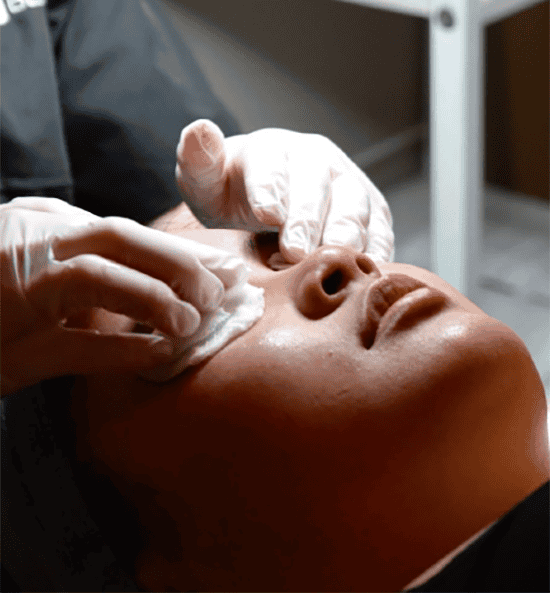
A strong medical aesthetics program also trains you to function in a clinic. That includes charting conventions, legal documentation, photography standards, pre- and post-op skincare for resurfacing, and team workflows with nurses or physicians. A para-medical skin care diploma should make you useful in the treatment room and the consult room: setting up sterile trays, educating patients on post-laser care, flagging pigment risk, and recommending medical-grade homecare that complements the provider’s plan.
Overlap, then divergence: service menus in the real world
Early in your career, the services you offer will be shaped by your environment more than your certificate title. In a boutique spa, a beauty institute graduate and a skincare academy graduate might both perform customized facials, waxing classes competencies, brow lamination, and dermaplaning. Over time, the academy graduate might take on advanced peel series, LED protocols for acne, and pigment management plans. In a clinic, the same person may support microneedling with PRP, manage pre-laser pretreatment to minimize post-inflammatory hyperpigmentation, and assist a nurse with device room turnover.
Here is where judgment counts. The theory you learn about melanocyte behavior matters when a client with a deep Fitzpatrick IV asks for a strong TCA peel three weeks before a beach vacation. A generalist might focus on “TCA clears pores.” A clinically trained esthetician thinks about tyrosinase inhibition, sun exposure, and delayed PIH risk, then builds a plan that starts with noninflammatory exfoliation, pigment suppression, and strict sunscreen adherence, pushing any medium-depth peel to off-season.
Cost, time, and expected ROI
Beauty school programs tend to be longer when they include cosmetology, shorter for esthetics-only tracks. Tuition ranges widely, but a typical esthetics program might cost the equivalent of several thousand to low five figures depending on region, with 600 to 1,500 hours of instruction tied to licensing requirements. Graduates start in entry-level spa roles, often with hourly base plus commission, landing in an annual income band influenced by tipping and retail performance.
Skincare academy tuition is variable because offerings range from short advanced certificates to comprehensive medical aesthetics courses. A focused advanced aesthetics college program might run a few weeks to several months. The return can be strong if your market rewards advanced services and you secure a clinic role. In medical aesthetics near me searches, you’ll see postings that pay higher hourly rates or day rates for device days, though they may require evening best medical aesthetics courses or weekend availability and strict KPIs on rebooking and packages.
The fastest ROI isn’t always the highest tuition program. It’s the program whose credential aligns with legal scope and local demand. If your city is saturated with lash bars but underserved in corrective acne care, a science-forward skincare academy curriculum that teaches extraction strategy, biofilm-aware homecare, and LED protocols can outperform expensive device training you won’t be allowed to use.
Vetting a program beyond the brochure
Most schools look polished on a tour day. You get a warm towel, not the sticky wax pot at 4 p.m. The difference shows in how they teach critical thinking, not just techniques. When I audit programs, I look at lesson plans and student logs before I look at the facial room.
Here’s a concise checklist to keep interviews focused.
- Licensing clarity: Does the program map every skill to your legal scope and outline what requires medical oversight? Hands-on volume: How many supervised services or device cases will you complete, and on what skin types? Assessment: Are you tested on consultation, not just protocols, including documentation and contraindication reasoning? Faculty: Who teaches what? Do device modules have trainers with current clinical hours, not only brand reps? Placement: What partnerships exist with spas, clinics, or dermatology offices, and what are the placement rates over the past two years?
If a school dodges these questions or answers with vague assurances, that’s a red flag. A mature program shows you anonymized student logs, a sample of chart notes, and recent graduate outcomes, even if some cohorts were small.
The waxing question, and why basics still pay the bills
Schools like to showcase lasers, but waxing academy modules still drive consistent revenue. Brow shaping and Brazilian waxing, performed with excellent hygiene and speed, can fill gaps when devices are down or a clinic’s calendar shifts. Solid waxing technician training teaches temperature control, hair growth staging, and skin stretch to prevent tearing. It also teaches client communication, which is half the battle. If a program treats waxing as an afterthought, you’ll feel it when you’re squeezed into a 20 minute slot with a nervous first-timer on retinol.
A strong program treats depilation like a specialty with its own protocols and contraindications. It builds habits that translate to everything else: clean setup, precise sectioning, and the discipline to stop when the skin says stop.
Clinical devices, legal limits, and smart sequencing of education
Let’s address the hard boundary that trips people up. A medical aesthetician isn’t a distinct license in many jurisdictions. If you are not a nurse or physician, you won’t be injecting neuromodulators or dermal fillers. You might assist, chart, photograph, and educate. You might perform microneedling within depth limits where allowed, or operate nonablative devices under protocol. Or you might not, depending on local law.
That doesn’t make advanced training pointless. Sequencing your education cleverly keeps doors open. For example, start with a strong esthetics school foundation, then complete an advanced chemical peels certificate with robust focus on skin of color. Add a device fundamentals course, even if it’s theory-heavy, so you can speak fluence, pulse duration, and chromophore with credibility. If nursing school is on your radar, hold off on expensive device practicums until you can operate them. Employers appreciate candidates who know what they’re allowed to do and how to support outcomes without pushing scope.
The retail and rebooking reality
Whether you train at a beauty college or a skincare academy, you’ll live or die by rebooking and homecare adherence. Clinics often run at thinner margins than students imagine because devices are expensive and maintenance contracts run high. A book filled with one-off deals will exhaust a team. The esthetician who can map a six-month plan, monitor photos, and course-correct without drama becomes indispensable.
Quality programs simulate this. I’ve seen clinics hire from a particular aesthetics school because grads arrive comfortable presenting a three-visit pigment plan with a retinoid ramp-up, a tyrosinase inhibitor, and realistic timelines. They know how to say, “Let’s pause your exfoliants for 72 hours after this peel,” and then document what happened, not just what they intended. If your prospective school never makes you defend your treatment plan, you’ll be learning that skill on paying clients, which is riskier for everyone.
Regional notes, with a quick look at Brampton and the GTA
The Greater Toronto Area, Brampton included, runs the full spectrum: high-volume salons, boutique studios, dermatology clinics, med spas with one to five devices, and chains offering subscription-based facials. Medical aesthetics Brampton searches pull up programs with varying levels of oversight. Some partner with nurse injectors for supervised days, others keep to skin therapy and retail. Ontario’s regulatory environment means non-medical providers need to stay firmly within scope. Good programs will say that directly, then teach you how to excel within it, including referral relationships with clinics for procedures you can’t perform.
If you’re comparing a skincare academy near me against a larger beauty school brand, tour both. In the GTA, I’ve seen small academies beat bigger names simply because they limit class sizes and recruit diverse skin types for student clinics. Seeing and treating Fitzpatrick I through VI during training shortens your rookie curve by years.
Career paths that start similar and end up very different
Two classmates can walk across the same stage and end up in different worlds by year three. One loves spa ambience, grows a following with lymphatic facial massage and seasonal peel packages, and becomes a lead trainer for new hires. Another pivots into a dermatology clinic, manages isotretinoin-adjacent skincare, and builds a reputation for safe acne extraction and scar care plans. A third becomes the go-to for hair removal, refines technique through waxing classes and speed training, and opens a specialty studio.
Both beauty school and skincare academy paths can lead there. Skincare academy training accelerates the clinic route, especially if it includes a para-medical skin care diploma. Beauty school breadth can be invaluable if you want to open a multi-service studio that employs a waxing technician, lash artist, and nail tech under one roof. The key is to keep your education layered: a license, then targeted modules, then brand certifications that match your clientele.
Choosing between offers when both look good
Sometimes you’re lucky. Two programs check the boxes, the tuition is comparable, and the commute is manageable. That’s when you look for the tiny things that matter later. What cleanser do they stock in the student clinic, and how do they teach you to adapt it? Do they normalize patch testing for peels on higher Fitzpatrick types, or is it a line in a manual no one follows? Do they track post-procedure calls, or do students wave goodbye and hope for the best?
Sit in on a lecture if they allow it. Ten minutes listening to an instructor teach transepidermal water loss will tell you whether they’ve been hands-on recently or are reading from slides. Ask to see a de-identified sample of a treatment plan that includes a rebooking cadence. Real programs will show you.
A note about brand affiliations and bias
Schools often partner with skincare or device brands. That’s not inherently bad. It means students have product to practice with and sometimes discounts that matter when you start building a kit. The risk is tunnel vision. You want instructors who can explain why you’d choose an azelaic-rich regimen over a pure AHA routine for inflammatory acne with sensitivity, even if the partner brand doesn’t make a perfect product for that scenario.
On the device side, ask whether you’ll learn general principles or just how to use one platform. Being fluent in spot size, fluence, pulse stacking, and endpoint assessment transfers across machines. Learning to push Button A then B on a single console does not.
Final guidance, grounded in real classrooms and clinics
If you want a service-forward career with a wide menu, strong client relationships, and the option to add nails or makeup, a reputable beauty school or beauty institute is a smart foundation. Make sure it takes sanitation and consultation seriously, and that you’ll log enough clinic hours to feel fast and safe with waxing, peels, and facials.
If your heart is set on a clinic, shadow in one before you enroll anywhere. Watch the flow. Then select a skincare academy or advanced aesthetics college that teaches anatomy in meaningful detail, breaks down device physics, and has honest guardrails about legal scope. A medical aesthetics program should make you a better teammate to medical providers, not promise injections you cannot legally perform. If nursing or another healthcare license is in your future, sequence your advanced device training to the point when you can use it.
Most careers aren’t linear, and that’s healthy. The best estheticians I know keep learning, whether it’s a concise waxing certification to tighten technique, a focused pigment management seminar to reduce PIH risk, or a para-medical module that improves their postoperative care instincts. Your clients will tell you what they need. Choose the school that prepares you to listen, adapt, and deliver safely. The rest follows.
8460 Torbram Rd, Brampton, ON L6T 5H4 (905) 790-0037 P8C5+X8 Brampton, Ontario